Google Ads Management for REI Lead Generation
Google AdWords Management for Real Estate Investors
Google AdWords, now known as Google Ads, gives real estate investors a way to reach homeowners who are actively searching for a solution. A seller looking for a cash buyer, a faster sale, foreclosure help, or a way to sell a difficult property may be closer to taking action than someone reached through a broader advertising channel.
A managed PPC campaign can help investors show up during that search, but the campaign has to be built around more than traffic. It needs the right keywords, the right markets, the right landing page, and the right tracking to turn paid search activity into motivated seller leads.
Campaign Clarity
Why Google AdWords Management Matters for Real Estate Investors
Real estate investor PPC can become expensive when the campaign is not managed carefully. High-intent searches have real value, and several investors may be competing for the same motivated sellers. Without consistent management, a campaign can spend money on broad terms, weak locations, poor-fit searches, or clicks that never become serious conversations.
PPC Force helps real estate investors manage Google Ads with a focus on lead quality, seller intent, and the full path from search to appointment. The goal is not simply to get more traffic. The goal is to generate PPC real estate leads that can become calls, appointments, offers, and signed deals.
A Managed Campaign Needs Direction
A Google Ads account can be active without being strategic. Real estate investors need campaign direction that connects the search term, ad copy, landing page, conversion action, and follow-up process. When those parts are disconnected, the campaign may create clicks but not enough qualified seller opportunities.
Good management gives the campaign a clear purpose. It identifies which searches are worth paying for, which markets deserve budget, which ads match seller intent, and which landing pages are turning visitors into leads. This is the difference between simply running ads and building a real pay per click advertising system.
01
Search Intent
The campaign should focus on searches that suggest a homeowner is actively looking for help selling, not broad real estate terms with weak seller intent.
02
Market Fit
Google Ads targeting should match the investor’s buying areas, acquisition goals, and markets where the team can respond quickly to sellers.
03
Page Match
The landing page should continue the same promise as the ad and make it easy for motivated sellers to understand the next step.
04
Lead Quality
Calls, forms, appointments, offers, and contracts should be reviewed so campaign decisions are based on real business value.
Google Ads Can Help Investors Reach Sellers Faster
Google Ads for real estate investors is valuable because it can create visibility quickly. SEO, referrals, direct mail, and brand awareness can all support growth, but they often take time to build. Paid search allows investors to appear for relevant searches while sellers are actively comparing options.
This is especially useful when an investor is entering a new market, testing a new location, or trying to increase lead flow while organic rankings are still developing. Google AdWords management can also reveal which keywords, cities, and seller situations are producing the strongest response.
That speed only helps when the campaign is structured correctly. PPC management for real estate investors should include search term review, negative keyword cleanup, bid adjustments, ad testing, landing page review, and conversion tracking. Strong paid media advertising connects the account to the full sales process.
Fast Visibility Needs Strong Follow-Up
Motivated seller leads can go cold quickly. If the campaign creates a call or form submission, the team needs a process for responding fast and moving the seller toward a real conversation.
Campaign Control Room
Managed PPC Should Track More Than Clicks
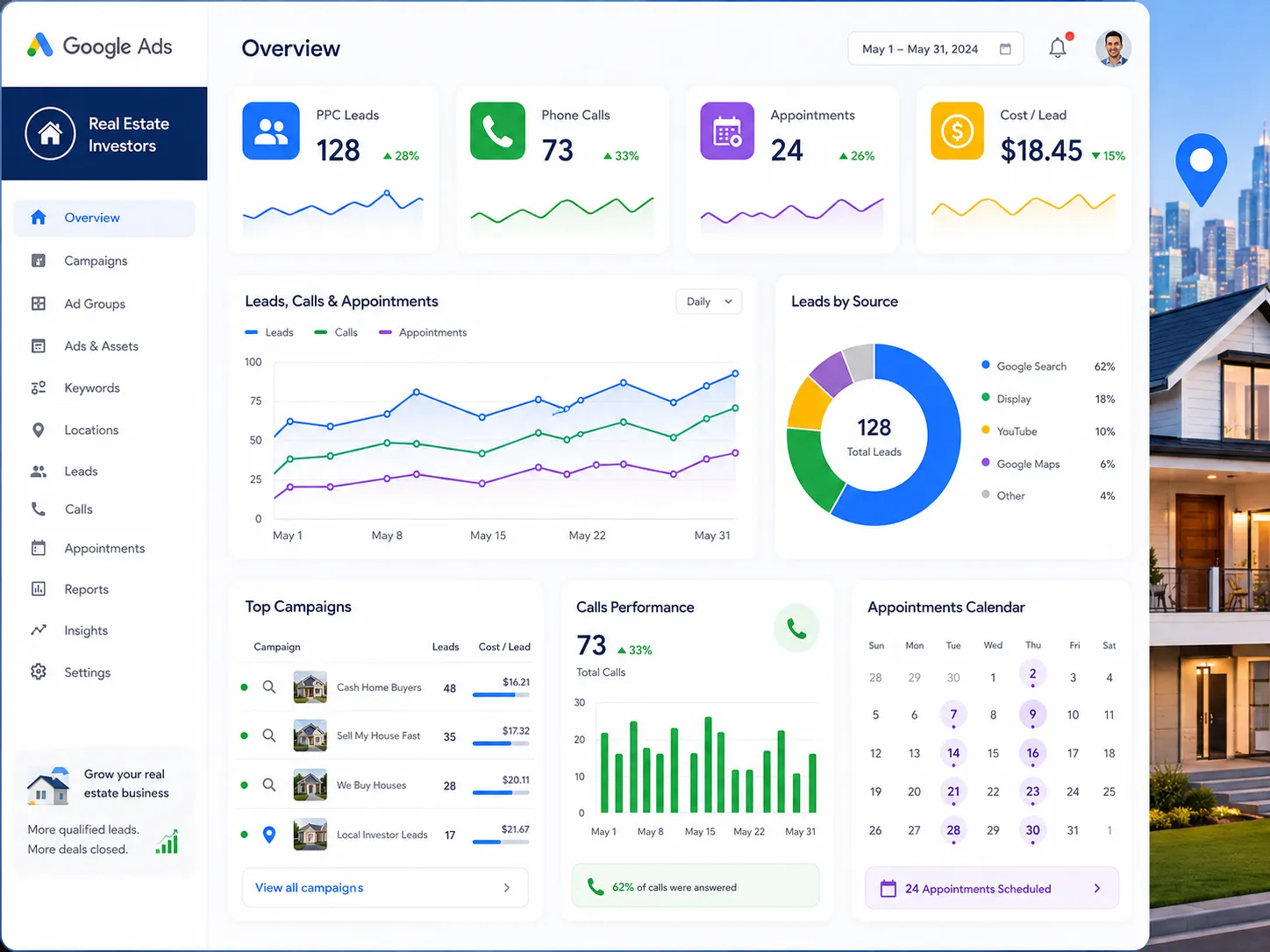
Clicks and impressions show activity, but they do not show whether the campaign is helping the investor buy more houses. A real estate investor needs to know which keywords create calls, which calls become appointments, which appointments become offers, and which offers become contracts.
A clean data strategy helps connect the ad account to real acquisition outcomes. It can show whether a campaign problem is caused by traffic quality, weak landing pages, call handling, slow follow-up, market fit, or inaccurate tracking.
When the reporting is clear, Google AdWords management becomes more practical. The investor can shift budget toward stronger markets, reduce spend on weak searches, and improve the parts of the funnel that are costing opportunities.
Motivated Seller Leads Need Better Keyword Control
Not every real estate search is worth paying for. Some searches are informational. Some are from buyers, renters, agents, or people researching general market topics. Google AdWords management should separate those searches from terms that suggest a homeowner may actually want to sell.
Real estate investor PPC should focus on seller intent. That means reviewing search terms often, excluding poor-fit traffic, and building campaigns around the specific situations the investor wants to reach. Better keyword control can improve lead quality and reduce wasted spend.
Distressed Seller Leads Need Clear Landing Pages
A seller dealing with pressure does not want a confusing page. The landing page should explain the process, answer common concerns, and make it easy to contact the investor. If the page is too general, slow, or difficult to use on mobile, the campaign can lose a serious lead after paying for the click.
Strong conversion rate optimization helps more paid search visitors become calls and form submissions. It can also help investors improve cost per qualified opportunity without simply increasing the ad budget.
The Website Is Part of the Ad Strategy
A paid search campaign should not be separated from the website. The ad creates the click, but the page creates the lead. For real estate investors, the page needs to match the seller’s search, explain the direct sale process, build trust, and make the next step easy.
Professional web design can support PPC performance by improving mobile usability, readability, trust signals, form placement, and page speed. Sellers should be able to call 619-389-2122 quickly or continue to #contact without friction.
Budget Efficiency
Lower Cost Per Lead Is Not Always the Best Metric
Many investors want a lower cost per lead, but the cheapest lead is not always the best lead. A campaign can generate low-cost forms that never answer the phone or never become appointments. Another campaign may cost more per lead but produce stronger seller conversations and better contract opportunities.
Google AdWords management should look beyond the cheapest click or cheapest form submission. The better measurement is cost per qualified opportunity. That means reviewing lead quality, seller motivation, appointment rate, offer rate, and the value of the deals that come from each campaign.
This is why PPC Force focuses on the full paid search funnel, not surface-level campaign activity.
What Management Should Improve
Google Ads management should make the campaign clearer, cleaner, and easier to scale when the lead quality supports it.
Cleaner Search Terms
Campaigns should remove weak search traffic and focus more budget on searches that are tied to seller intent.
Better Local Targeting
Budgets should be aligned with the locations where the investor actually wants to buy and where leads are converting.
Stronger Page Experience
Landing pages should be reviewed for clarity, mobile usability, speed, message match, and form performance.
More Useful Reporting
Reports should show how paid search connects to calls, forms, appointments, offers, contracts, and real opportunities.
Google Ads Can Inform the Rest of the Marketing Plan
Paid search data can help real estate investors make smarter decisions beyond the ad account. If a specific city, seller situation, or keyword produces qualified leads through Google Ads, that insight can guide future content and organic search priorities.
This makes Google AdWords management useful for search engine optimization and broader marketing strategy. PPC data can help decide which location pages, service pages, and seller situation pages deserve more attention.
A strong digital marketing strategy connects paid search, SEO, landing pages, reporting, and follow-up so each channel supports the same acquisition goals.
Paid Search Can Guide Future Growth
Search term data, lead quality, and conversion outcomes can help investors decide where to build more content and where to spend more carefully.
Next Step
Get Google AdWords Management Built Around Real Seller Leads
Google AdWords management for real estate investors should focus on more than campaign activity. It should focus on motivated seller leads, distressed seller leads, PPC real estate leads, appointment quality, cost per qualified opportunity, and the full path from search to seller conversation.
If your campaigns are getting clicks but not enough quality leads, PPC Force can help review your paid search strategy, landing pages, tracking, and conversion process.
Call 619-389-2122 or request help through #contact to build a Google Ads management strategy focused on qualified motivated seller opportunities.