Paid Search Platform Comparison
Google Ads vs. Microsoft Bing Ads for Real Estate Investor Lead Generation
Real estate investors use paid search marketing to reach homeowners who are actively looking for options. When a seller searches for help with a fast sale, cash offer, foreclosure concern, inherited house, or difficult property, the right ad platform can place an investor in front of that seller at an important decision point.
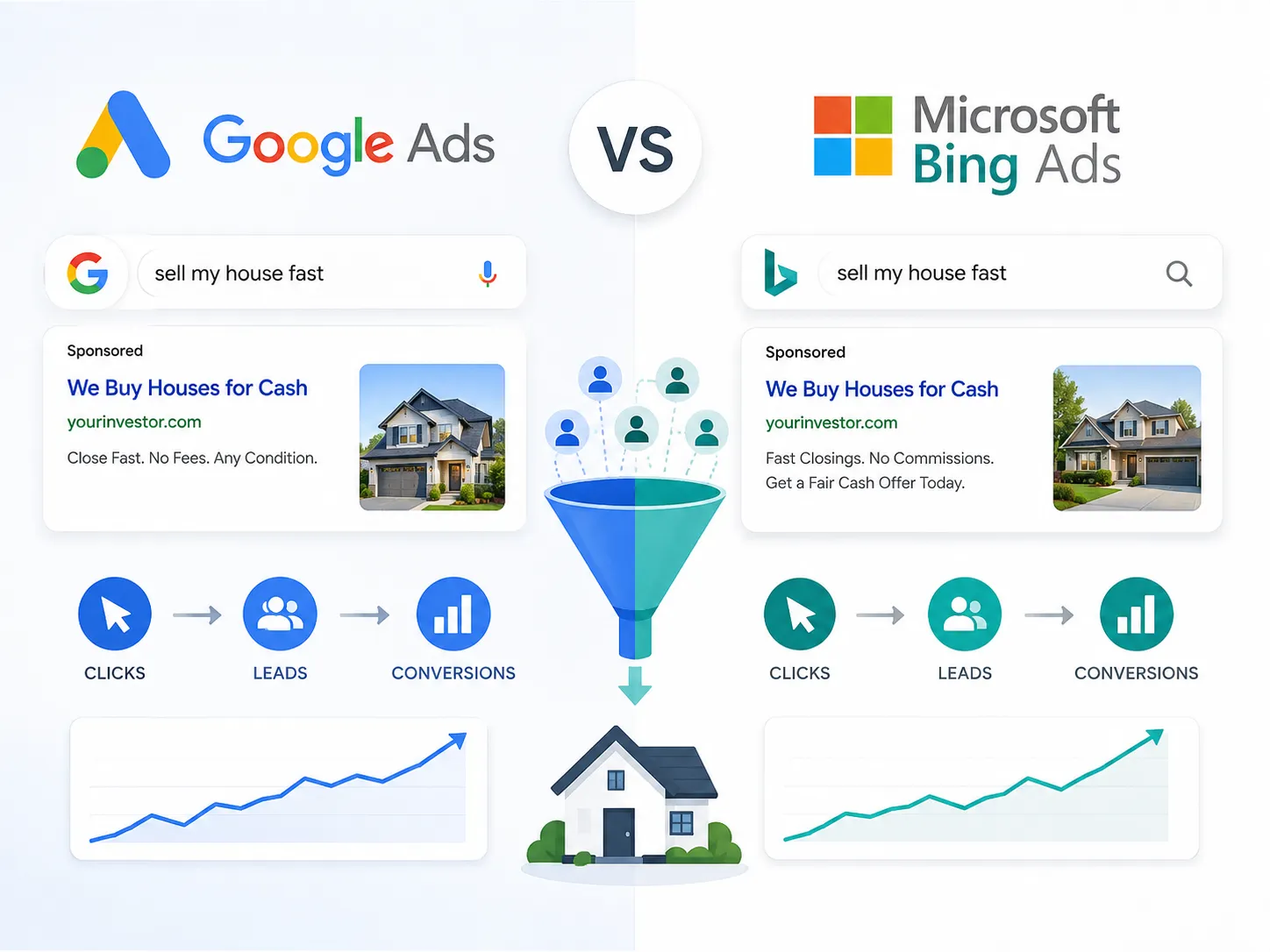
Google Ads and Microsoft Bing Ads can both support real estate investor lead generation, but they are not identical. Google Ads usually offers broader search volume and more competition. Microsoft Bing Ads can sometimes provide additional reach, different audience behavior, and lower competition in certain markets.
PPC Force helps real estate investors compare paid search platforms based on lead quality, search intent, cost per opportunity, landing page performance, and the full path from click to seller conversation.
The Main Difference
Volume vs. Opportunity
The decision between Google Ads and Microsoft Bing Ads usually comes down to search volume, competition, cost, and lead quality. Google Ads often gives real estate investors access to more search activity, while Microsoft Bing Ads may offer a useful secondary channel when the campaign is already performing well or when the investor wants more coverage.
For real estate investors, the best platform is not always the one with the cheapest click or the biggest audience. The better question is which platform produces motivated seller leads that can become appointments, offers, and contracts. A campaign with higher search volume can still underperform if the landing page is weak, tracking is incomplete, or the follow-up process is slow.
Both platforms should be evaluated through the same lens. Which searches are driving calls? Which forms are serious? Which locations are producing real seller conversations? Which campaigns are creating qualified PPC real estate leads instead of low-intent traffic?
A strong pay per click advertising strategy should make those answers clear before budget is scaled.
Where Google Ads Usually Has the Advantage
Google Ads is often the first platform real estate investors consider because of its reach and search behavior. Many homeowners begin their search on Google when they need a quick answer, and that can make Google Ads valuable for investors targeting motivated seller leads.
Google Ads for real estate investors can be useful for campaigns focused on selling quickly, cash buyers, distressed property situations, inherited homes, foreclosure concerns, and other high-intent searches. It can also provide faster feedback on which keywords, cities, and seller problems are worth pursuing.
The challenge is competition. Popular real estate investor PPC keywords can attract several advertisers, which means the campaign needs careful management, stronger landing pages, and accurate tracking to avoid wasted spend.
Where Microsoft Bing Ads Can Help
Microsoft Bing Ads can be a useful addition for real estate investors who want more paid search coverage beyond Google. While Bing usually has lower search volume than Google, it can still reach homeowners who are actively searching for real estate solutions.
Bing Ads may also have less competition in certain markets. That can make it worth testing for investors who already have a strong Google Ads foundation and want to find additional motivated seller opportunities without relying on one platform alone.
For real estate investor lead generation, Microsoft Bing Ads should still be held to the same standard as Google Ads. The platform needs focused keywords, strong location targeting, clean tracking, relevant landing pages, and a process for reviewing actual lead quality.
Platform Selection
How Real Estate Investors Should Compare the Two
Google Ads and Microsoft Bing Ads should not be compared only by cost per click. A cheaper click is not always a better click. Real estate investors should compare platforms by the quality of calls, form submissions, appointment rate, offer rate, contract potential, and how well each channel supports the investor’s acquisition goals.
A campaign may generate fewer leads on Bing but still produce profitable opportunities if the traffic is qualified. A Google campaign may produce more volume but require stronger optimization to control cost and improve lead quality. The best answer depends on the market, budget, competition, and sales process.
What Both Platforms Need to Work
Google Ads and Microsoft Bing Ads can both support PPC for real estate investors, but the platform alone does not create results. The campaign structure and follow-up system matter just as much as the ad network.
Focused Seller Keywords
The campaign should prioritize searches that suggest a homeowner may need help selling, not broad real estate searches that attract poor-fit traffic.
Accurate Location Targeting
Paid search should focus on the investor’s real service areas, acquisition goals, and markets where the team can handle new seller conversations.
Relevant Landing Pages
The landing page should continue the same message as the ad and make the next step easy for sellers who want to call or submit their information.
Real Lead Quality Tracking
The campaign should track calls, forms, appointments, offers, and contracts so budget decisions are based on real seller opportunities.
Campaign Tracking
Data Should Decide Where the Budget Goes
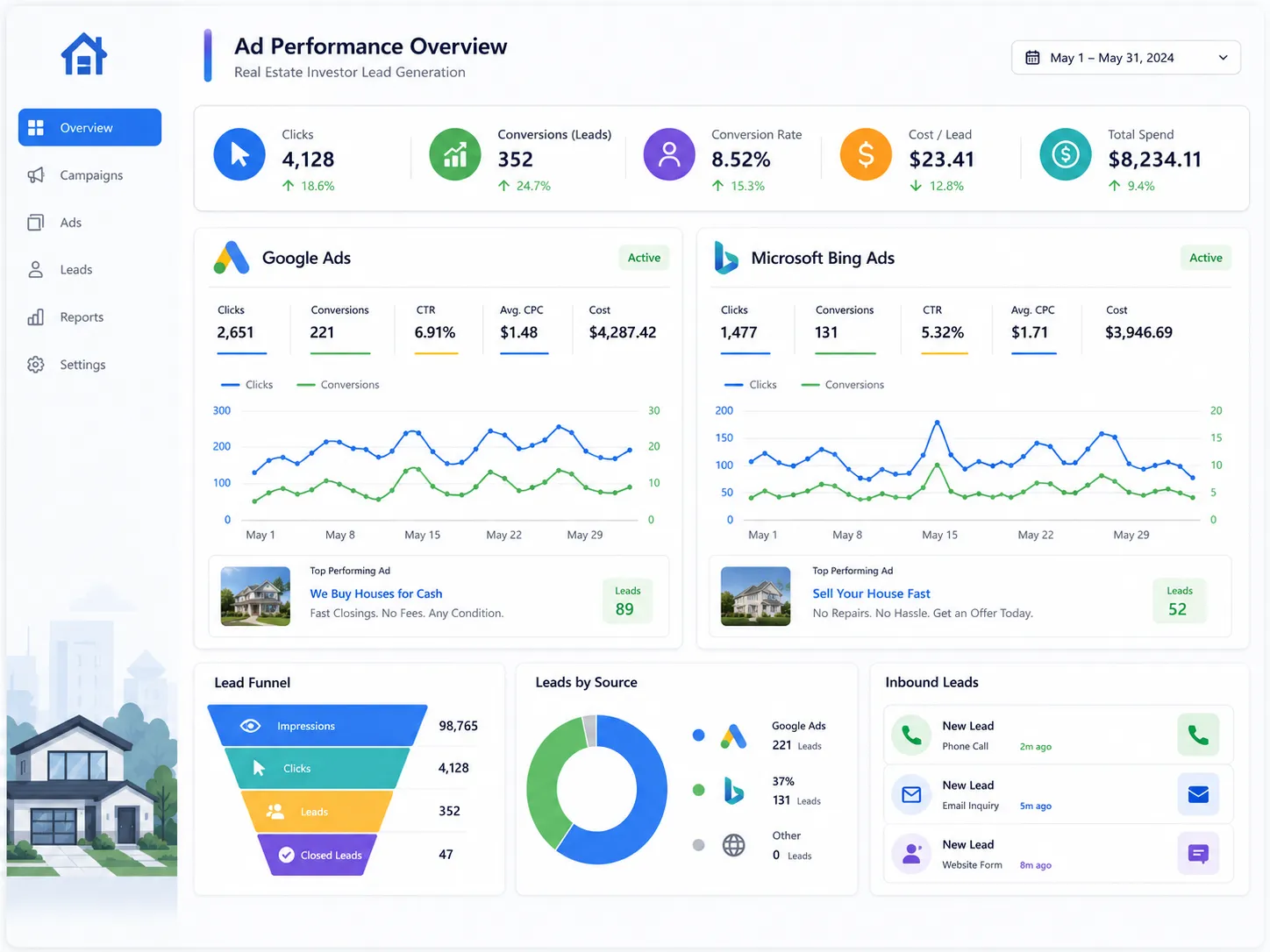
A strong paid search strategy should make budget decisions based on real performance. If Google Ads is producing more calls but Bing Ads is producing lower-cost appointments, that matters. If Bing traffic is limited but qualified, it may deserve a supporting role. If Google is producing the strongest lead volume, it may remain the primary platform.
A clean data strategy helps real estate investors understand which platform is creating real opportunities. This includes tracking calls, form submissions, appointment quality, offer outcomes, and lead source data.
Without that visibility, it is easy to make decisions based on surface-level numbers. Clicks and impressions are useful, but they do not show whether Google Ads or Microsoft Bing Ads is actually producing motivated real estate seller leads.
Google Ads May Be the Primary Channel, But Bing Can Support Growth
For many investors, Google Ads is the primary paid search platform because it usually offers more search volume. That makes it a strong starting point for investors who need faster lead flow and want to test real estate PPC strategies in specific markets.
Microsoft Bing Ads can still support growth when the Google campaign is already structured well. It can provide additional reach, help diversify paid search traffic, and create another source of PPC real estate leads. The key is to test Bing with the same discipline used for Google Ads.
A strong paid media advertising strategy should decide the role of each platform based on search demand, cost, lead quality, and conversion data.
Use Each Platform for the Right Role
Google Ads often leads the strategy. Microsoft Bing Ads can support the strategy when the investor wants additional paid search coverage and measurable testing.
Landing Pages Matter on Both Platforms
No ad platform can fully overcome a weak landing page. Whether the click comes from Google Ads or Microsoft Bing Ads, the visitor should land on a page that matches the search, explains the offer, and makes the next step clear.
Strong conversion rate optimization can help investors turn more paid search traffic into calls and form submissions. Professional web design can also support PPC performance by improving trust, page speed, mobile usability, and the overall seller experience.
For mobile visitors, calls should be easy through 619-389-2122, and online requests should guide users to #contact.
When Google Ads Is the Better Starting Point
Google Ads is usually the better starting point when an investor needs the largest search opportunity, faster lead testing, and broader access to homeowners searching for selling solutions. It is often the first platform to structure, test, and optimize before expanding paid search elsewhere.
This is especially true for investors focused on high-intent searches like google ads for real estate investors, ppc real estate leads, ppc for real estate investors, and other terms connected to motivated seller lead generation.
When Microsoft Bing Ads Is Worth Testing
Microsoft Bing Ads is worth testing when the investor has a strong Google Ads foundation, wants additional reach, or is looking for another paid search channel that may have different competition levels. It can also help diversify traffic so the investor is not relying only on one ad platform.
Bing should still be tested carefully. The campaign should be measured by lead quality, appointment outcomes, and cost per real opportunity, not only lower click costs or extra impressions.
Build a Paid Search Strategy That Uses the Right Platform at the Right Time
Google Ads and Microsoft Bing Ads can both help real estate investors reach sellers through paid search. The right choice depends on search volume, competition, budget, lead quality, and the investor’s ability to respond quickly when new inquiries come in.
If your campaigns need stronger targeting, clearer tracking, or better lead quality, PPC Force can help review the full paid search funnel across Google Ads, Microsoft Bing Ads, landing pages, data, and conversion performance.
Compare Google Ads and Bing Ads With Better Data
Call 619-389-2122 or request help through #contact to build a real estate investor paid search strategy focused on motivated seller leads and measurable growth.